Beyond Emiratization Targets: Building a workforce strategy that creates long-term business value
2 minutes
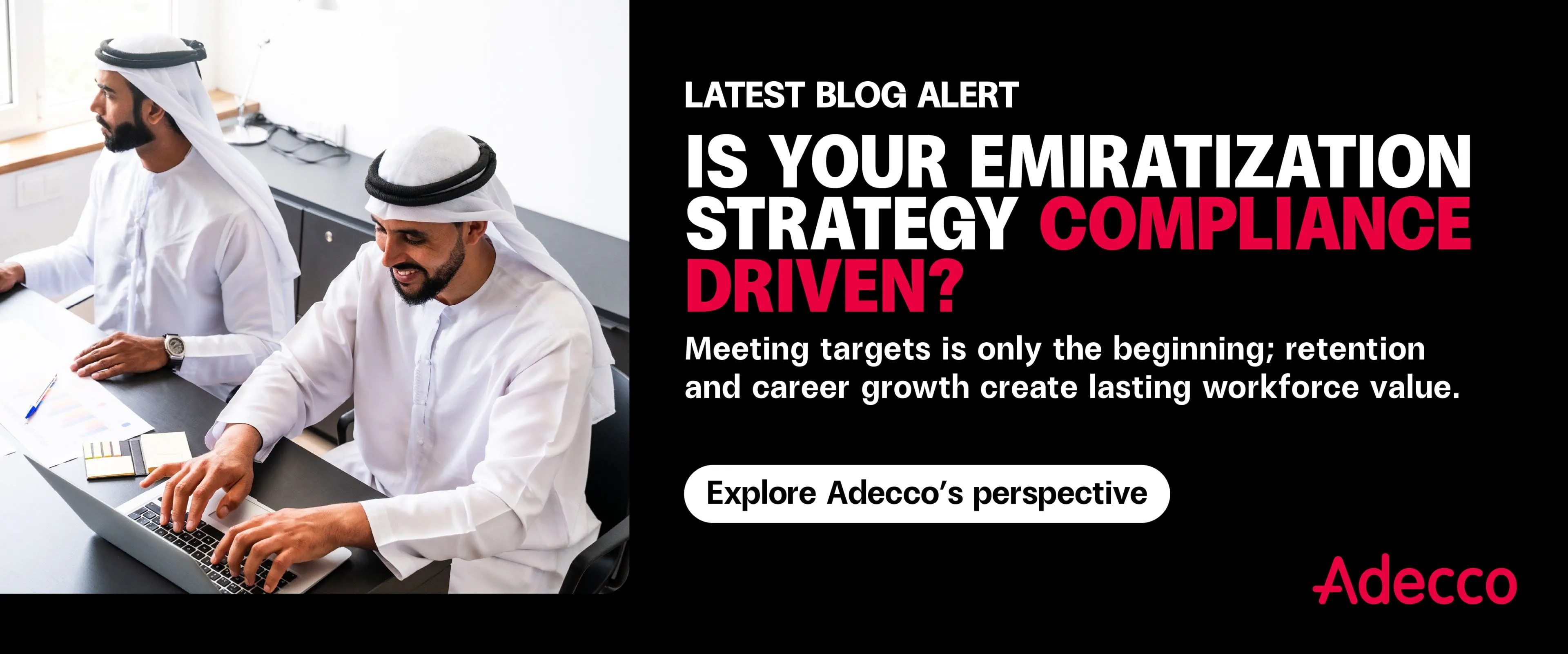
The UAE's Emiratization journey has entered a new phase. According to the Ministry of Human Resources and Emiratization (MOHRE), 95% of private sector companies subject to Emiratization requirements successfully met their first-half 2026 targets, with more than 190,000 Emiratis now employed across the private sector. The continued expansion of initiatives such as Nafis reflects the UAE's long-term commitment to developing a skilled national workforce and creating sustainable employment opportunities.
While these milestones demonstrate significant progress, they also highlight a broader shift in how organizations should approach Emiratization.
The conversation is no longer centered on meeting hiring targets. It is about building a workforce strategy that attracts, develops, and retains Emirati talent in ways that strengthen both business performance and the UAE's long-term economic ambitions.
Why leading organizations are approaching Emiratization differently
Organizations consistently achieving their Emiratization goals are rarely treating compliance as a year-end exercise. Instead, they are embedding Emiratization into broader workforce planning, talent acquisition, and leadership development strategies.
This means building relationships with universities, engaging with Nafis throughout the year, identifying future workforce requirements, and creating structured career pathways that allow Emirati professionals to grow within the organization.
Rather than recruiting to meet quotas, these organizations are investing in long-term capability.
The result is stronger employee engagement, improved retention, and a workforce that is better prepared to support future business growth.
Why simply meeting targets is no longer enough?
While compliance remains essential, successful Emiratization extends well beyond recruitment.
Organizations that focus only on hiring often struggle with retention, employee engagement, and long-term workforce continuity. Without meaningful onboarding, development opportunities, mentoring, and clear career progression, organizations risk losing valuable talent and repeating the recruitment cycle.
As industries across technology, financial services, healthcare, logistics, manufacturing, and energy continue to evolve, organizations need Emirati professionals who are empowered to contribute, innovate, and grow alongside the business.
When Emiratization becomes part of workforce strategy rather than a standalone HR initiative, organizations strengthen succession planning, leadership pipelines, and organizational resilience while contributing to the UAE's national vision.
Building a sustainable Emirati talent pipeline
Creating lasting workforce impact requires planning long before recruitment begins.
Forward-thinking employers are using workforce analytics to forecast hiring needs, partnering with educational institutions to build future talent pipelines, investing in graduate development programmes, and creating workplace cultures where national talent can thrive.
Equally important is ensuring that recruitment decisions are based on capability, business needs, and long-term potential rather than short-term compliance deadlines.
This strategic approach transforms Emiratization from a regulatory obligation into a competitive advantage that supports innovation, workforce stability, and sustainable business growth.
Creating long-term value through strategic workforce planning
As the UAE's workforce continues to evolve, organizations that succeed will be those that view Emiratization as an investment in future capability rather than a compliance milestone. Building sustainable national talent pipelines requires more than filling vacancies. It demands strategic workforce planning, meaningful career development, and a deep understanding of the evolving local talent landscape.
Combining regional market intelligence with expertise in recruitment, workforce advisory, and nationalization strategies, Adecco Middle East partners with organizations to build Emiratization programmes that deliver lasting impact. From identifying and attracting qualified Emirati professionals through platforms such as Nafis to supporting structured onboarding, workforce planning, and long-term talent development, Adecco helps organizations create workforce strategies that go beyond compliance. By aligning business priorities with national workforce objectives, organizations can strengthen employer reputation, build future-ready leadership pipelines, and create sustainable value for both their business and the UAE's continued economic growth.